
Peptide Therapy: A Game-Changer for Athletic Performance
At Southern Care Anesthetics in Hattiesburg, MS, our team offers peptide therapy designed to enhance athletic performance, increase energy, and support overall physical endurance. Peptides can help improve muscle function, reduce fatigue, and promote recovery after intense training sessions. Our personalized approach ensures that each treatment plan is tailored to meet the specific goals of athletes and active individuals.For more information, contact us or book an appointment. We are located at 4 Willow Point Ste 1B Hattiesburg, MS 39402.
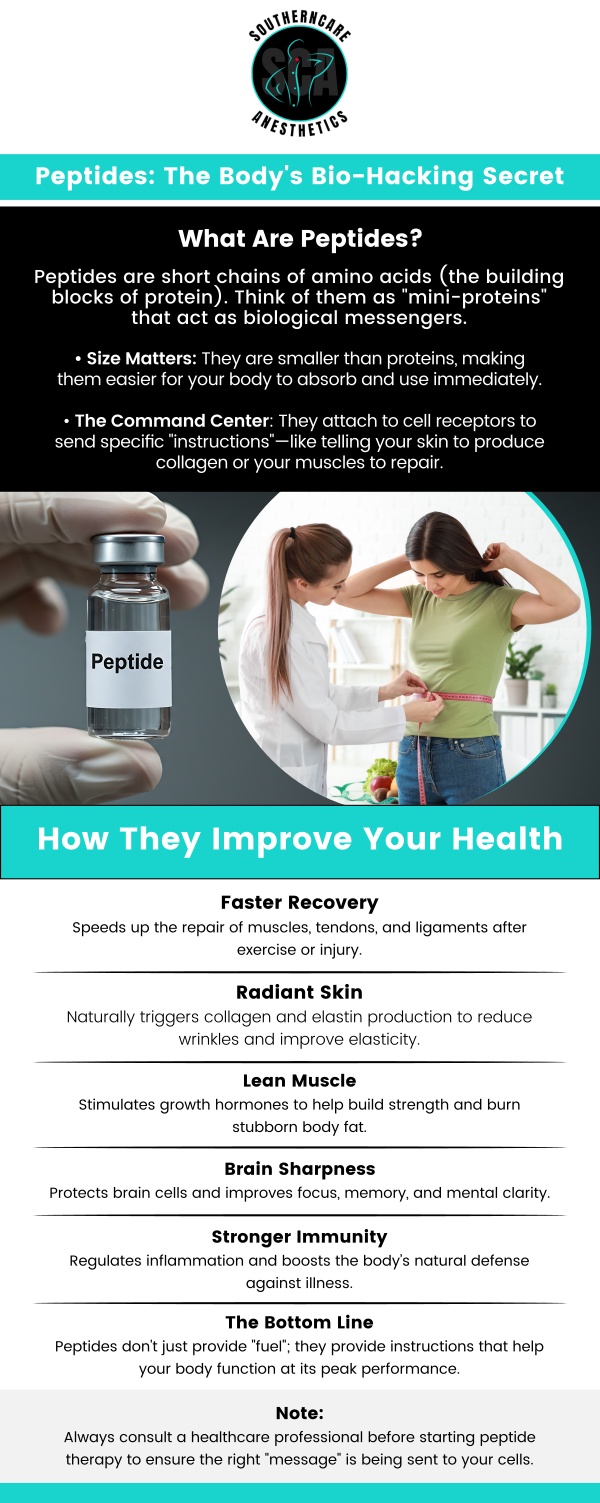
Table of Contents:
What is peptide therapy, and how can it improve athletic performance?
Which peptides are commonly used for athletic performance enhancement?
How does peptide therapy enhance strength and endurance?
How does peptide therapy compare to other performance‑enhancing treatments?
Can Southern Care Anesthetics guide me through peptide therapy for better athletic performance?
Peptide therapy uses short chains of amino acids—called peptides—that naturally occur in the body and act as signaling molecules. These small proteins communicate with cells and tissues to trigger or regulate biological responses that influence muscle growth, recovery, metabolism, immune function, and more.
In the context of athletic performance, peptide therapy is designed to optimize the body’s natural systems to help with:
• Muscle repair and growth
• Recovery after strenuous training
• Inflammation control
• Energy production and endurance
• Hormone balance related to training adaptation
Because peptides influence major physiological systems, they’re of interest to athletes who want to enhance performance, support consistent training, and minimize downtime due to fatigue or injury. Unlike traditional supplements, peptides often work at a cellular signaling level, helping the body respond more efficiently to physical stress.
At Southern Care Anesthetics, peptide therapy is approached responsibly and medically, with oversight to ensure safety and effectiveness, not just performance benefit.
Several peptides have been studied and used for their potential effects on athletic performance. Some of the more commonly discussed options include:
BPC‑157
• Known for supporting tendon and ligament healing
• May help accelerate recovery after soft tissue injuries
TB‑500 (Thymosin Beta‑4)
• Associated with promoting tissue repair and regeneration
• Often explored for recovery from repetitive strain or training stress
IGF‑1 LR3 (Insulin‑Like Growth Factor‑1 Long Arg3)
• Influences muscle growth and repair
• Works downstream of growth hormone signaling
CJC‑1295 + DAC
• Stimulates growth hormone release, which can support muscle development and fat metabolism
GHRP‑6 / GHRP‑2
• Peptides that also trigger endogenous growth hormone release, supporting tissue repair and strength improvements
It’s important to note that while research continues to evolve, peptide therapy should be tailored to individual goals, training status, and health background. Not all peptides are appropriate for everyone, and the clinical oversight of a trained provider helps determine which, if any, will support your performance goals safely.
Peptide therapy can support strength and endurance through several mechanisms:
Stimulating Growth Hormone Pathways: Certain peptides trigger the release of growth hormone or its mediators. Growth hormone plays a role in:
• Muscle protein synthesis
• Fat metabolism
• Bone density
• Recovery from intense training
• When peptides encourage growth hormone activity, the body’s capacity to adapt to physical stress and build stronger muscle tissue may be enhanced.
Promoting Tissue Repair and Healing: Peptides like BPC‑157 and TB‑500 are associated with tissue regeneration and healing. This may help athletes recover more quickly from strains, overuse injuries, or micro‑trauma associated with rigorous training.
Supporting Anti‑Inflammatory Processes: Some peptides have properties that help modulate inflammation, which can reduce soreness and support resilience between workouts or competition.
Enhancing Cellular Communication: Because peptides serve as biological messengers, they can influence how cells respond to stress, growth signals, and metabolic demands — potentially improving endurance and efficiency during prolonged or high‑intensity activity.
Optimizing Energy Metabolism: By influencing pathways involved in energy production, peptides may help reduce fatigue and support more sustained performance during training or competition.
It’s critical to understand that peptide effects are modulatory rather than miraculous — they support underlying physiology rather than replace disciplined training, nutrition, and recovery strategies.
Peptide therapy differs from other performance‑enhancing approaches in several ways:
• It Works Within the Body’s Signaling Systems: Unlike stimulants or direct hormonal injections, peptides often work by modulating natural signaling pathways, encouraging the body to respond in a balanced way.
• Targeted Biological Effects: Peptides tend to have specific targets (e.g., tissue repair, hormone release, inflammation control) rather than broad systemic effects.
• Potentially Lower Side Effect Profile: When used responsibly under medical supervision, peptide therapy may have fewer systemic side effects compared to traditional anabolic steroids or hormone therapies. That said, safety depends on proper evaluation, dosing, and oversight.
• Complementary to Training and Recovery: Peptides are designed to support recovery, adaptation, and resilience, not replace essential components like training consistency, nutrition, sleep, and hydration.
• Regulatory and Ethical Considerations: Some performance‑enhancing substances are banned in competitive athletics by organizations like the World Anti‑Doping Agency (WADA). It’s important to know which peptides are allowed in your sport and to prioritize health and compliance with competition rules.
In clinical practice, peptides are viewed as adjunctive tools to enhance physiological function, not quick fixes or shortcuts.
Yes—at Southern Care Anesthetics in Hattiesburg, MS, and peptide therapy are approached with medical oversight, individualized assessment, and a focus on safety and long-term well-being. Rather than a one-size-fits-all protocol, your journey begins with a comprehensive evaluation that includes:
• Health History and Goals: Understanding your medical history, performance goals, training demands, and lifestyle helps create a targeted plan.
• Baseline Assessments: Before starting peptide therapy, our team evaluates relevant lab work and physical markers to ensure your body is ready for treatment and to identify any contraindications.
• Personalized Peptide Selection: Not all peptides are suitable for every person. Your provider at Southern Care Anesthetics will recommend peptides—if appropriate—that align with your goals, physiological status, and risk profile.
• Customized Dosing and Monitoring: Safe and effective peptide therapy requires appropriate dosing and regular monitoring. We provide ongoing assessment to track response, adjust the plan, and ensure you stay within safe parameters.
• Education and Support: We emphasize education about how peptides work; realistic expectations; potential side effects; and how therapy fits into your overall performance plan—including nutrition, sleep, and exercise.
• Holistic Care Integration: Peptide therapy is one part of a larger health strategy. Southern Care Anesthetics also supports other aspects of wellness that influence performance, recovery, and resilience.
If you’re interested in exploring peptide therapy, a consultation at Southern Care Anesthetics can help determine whether it aligns with your performance goals and overall health needs. For more information, contact us or book an appointment. We are located at 4 Willow Point Ste 1B Hattiesburg, MS 39402. We serve patients from Hattiesburg MS, Petal MS, Barrontown MS, Oak Grove MS, West Hattiesburg MS, and surrounding areas.


Additional Services You May Need
▸ Lower Back Pain
▸ PRP Injections
▸ Body Braces
▸ Botox For Neck Pain
▸ Chiropractic Care
▸ Facet joint injections
▸ Sacroiliac Joint Injection
▸ Spinal Cord Stimulation
▸ Knee Nerve Rhizotomy


 Send Text
 How May I Help You?